OVERVIEW
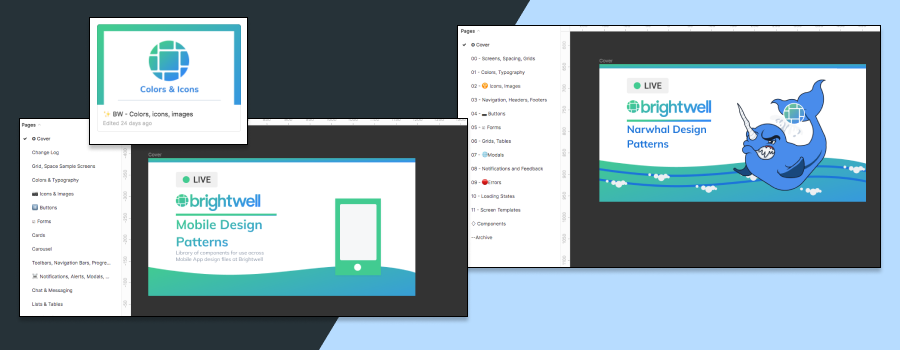
The moment I joined Brightwell in 2018, I started working on a design system that was implemented and maintained throughout my time at the company. Starting with application with no common design languages across platforms and features, I put all my energy into establishing patterns and consistency in the design language and the use of components.
In this project, I will describe my interpretation and philosophy for design systems, the context of the application when I joined, where I got started with this system, its structure, how it was maintained and discuss challenges I wish I could have solved in my time at Brightwell
Design Systems and Me
MY EXPERIENCE
I first encountered design systems when working on the redesign of Delta.com at AQKA. Part of the work was creating a new system for the website, and I had the opportunity to work alongside experienced designers and discover what went into it.
As someone who is deeply drawn to structure and organization, I immediately found myself fascinated by them and went on to read books and articles on the subject, look up other existing systems, and use the most successful ones at the time as inspiration for my work.
At Brightwell, I was in charge of creating and maintaining the design system for 2.5 years.
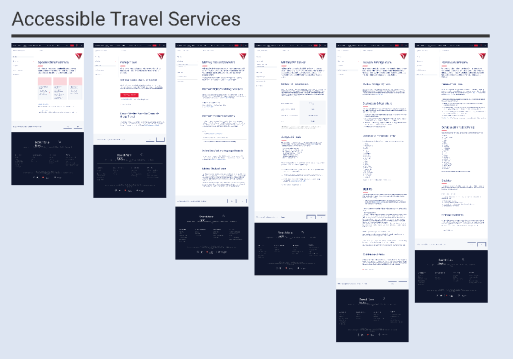
Example page designs of Delta.com using the new design system
DESIGN SYSTEM PHILOSOPHY
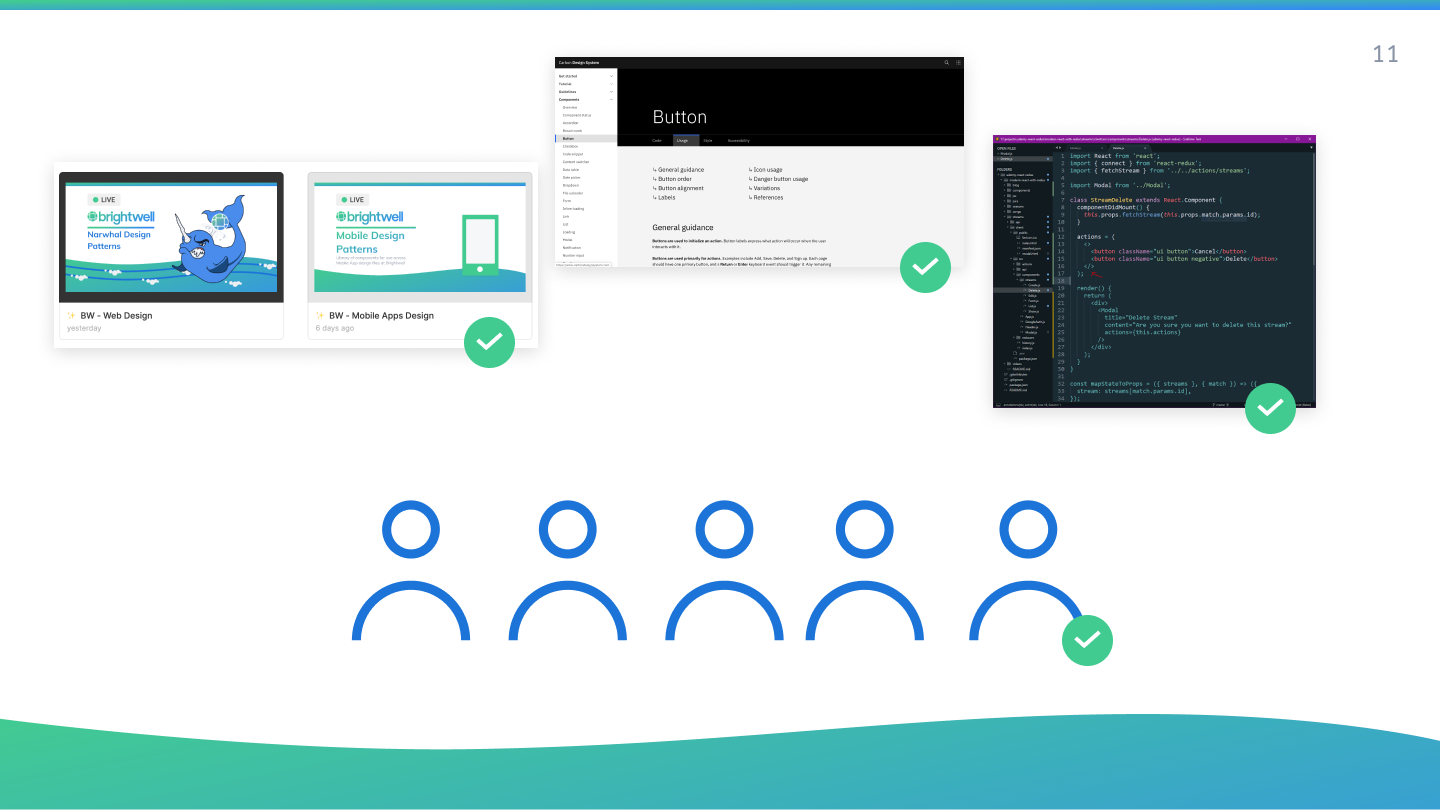
From a design standpoint, the design system is often a shorthand to refer to a library of established components that designers pull from, and that is often the deliverable that is asked for when someone asks to “create a design system”.
However, I believe that “design systems” aren’t just the patterns designers use, but also encompass any documentation that is created to communicate those patterns between and within departments, as well as the code that the developers create and becomes the public part of the system, the people who are creators and users of those systems, and the processes that are created to facilitate collaboration around those systems. They’re complex, living systems with a lot of moving parts that are primarily comprised of the people working on them.
Brightwell Design System - Starting Point
BRAND CONSISTENCY
When I started at Brightwell, one of the largest problem that immediately jumped at me was the lack of consistency within the applications. The website looked completely different than the Android app, which in turn looked completely different from the iOS app. Brightwell had established “Brand colors”, but none of those were reflected in the app in any way, old logos were still in use.
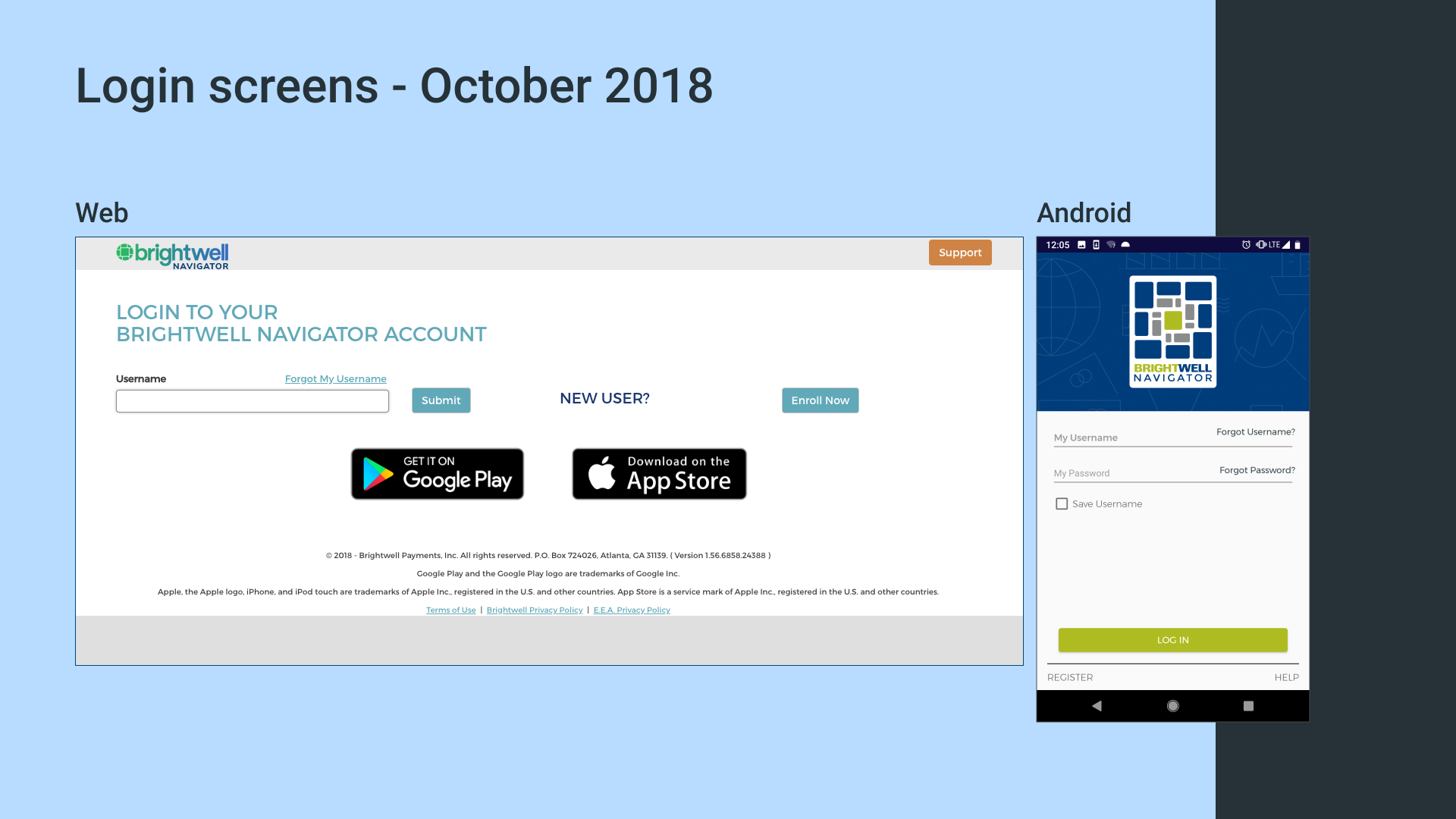
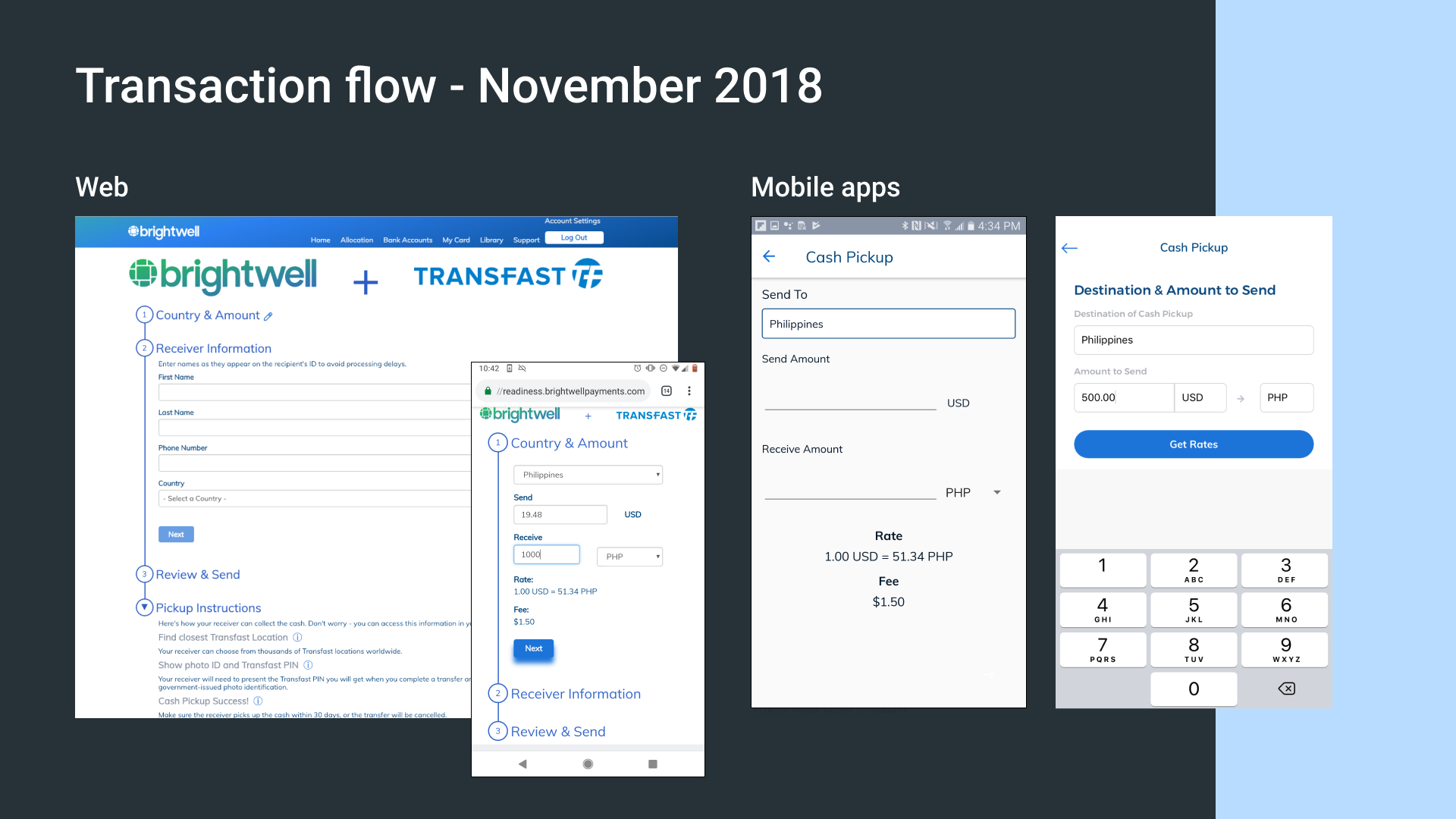
My first step was to request “easy” changes - Replacing all the colors used with brand colors, and making sure that they passed WCAG accessibility guidelines, even if it meant using a slightly darker “blue” in my system than the brand one.
Features within the same platform were also completely different, for example the text input style used on transaction screens was completely different from the one in enrollment, which in turn was different from the support form. Buttons, Text styles, copy, interaction patterns, error feedback… all were different.
DOCUMENTING
[Talk about how I started with delivered design elements? Fixes to them?]
Pilot Project
Pilot project: MoneyGram transfer. Process
Wins, Losses
Moving forward: update 1 project at a time
File Structure, maintenance and Challenges
[REVIEW MY FIGMA TALK FOR THIS SECTION]
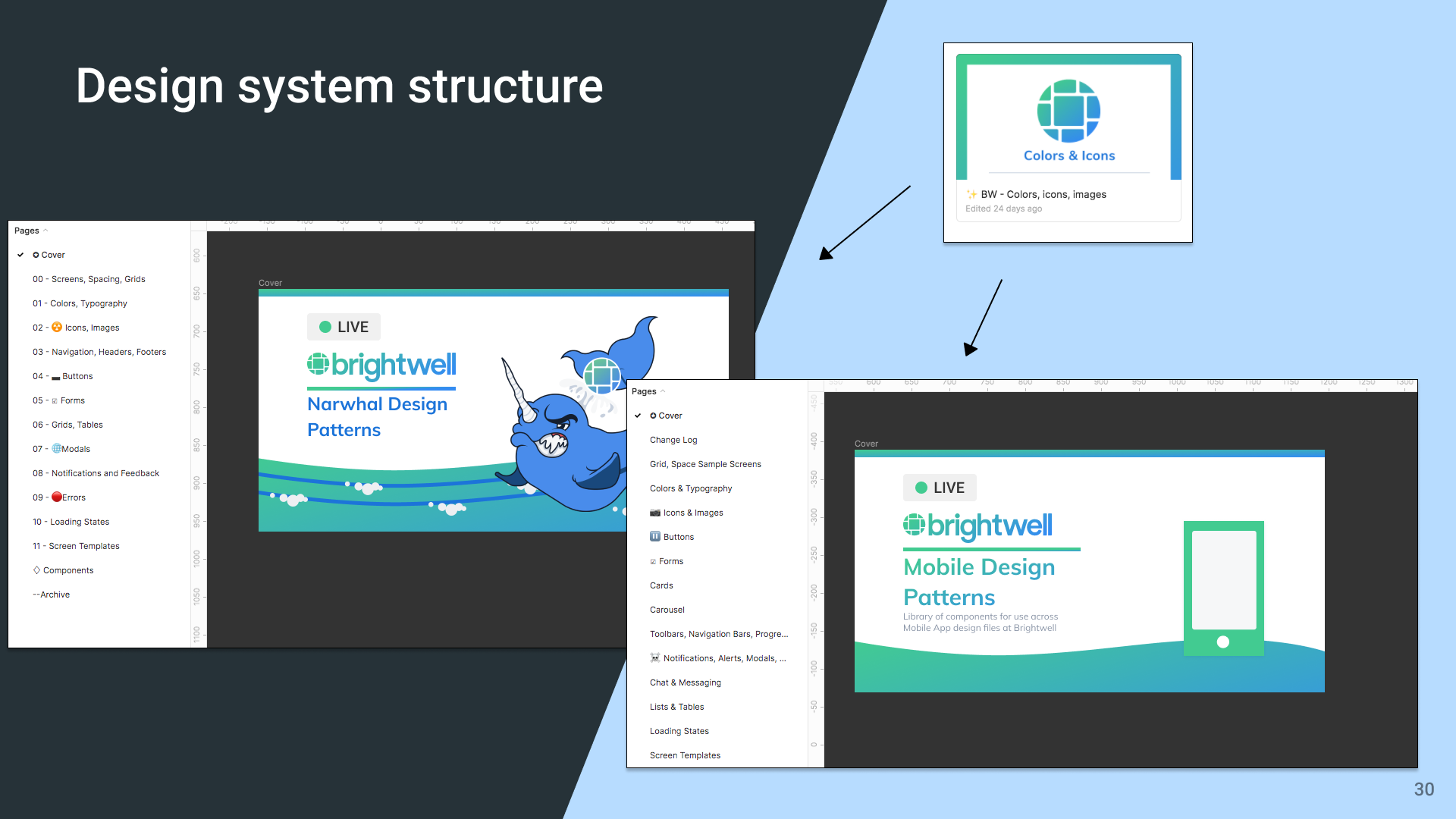
Other Challenges: Skeletal team - Product design team of 1 (conduct research, projects on top of maintenance), few developers with higher priorities defined by the business (lack of front-end web, 1 app developer per platform at a time), code debt (old projects in different codebase and frameworks). Lack of time, never dedicated time specifically for design systems.
How challenges were overcome: 1 project at a time (see how much can be done within projects), bridge communication through regular meetings (not for design systems only, mostly bridge communication between dev and design)
Future Steps
These will obviously never be acocmplished as I am not with the company anymore, but I had plans and dreams of prioritizing more work using design system specific user stories, aligning further with the product/dev team on design systems, and haivng a regular cadence of debriefs on design systems.
END